


Educational Space
Competition
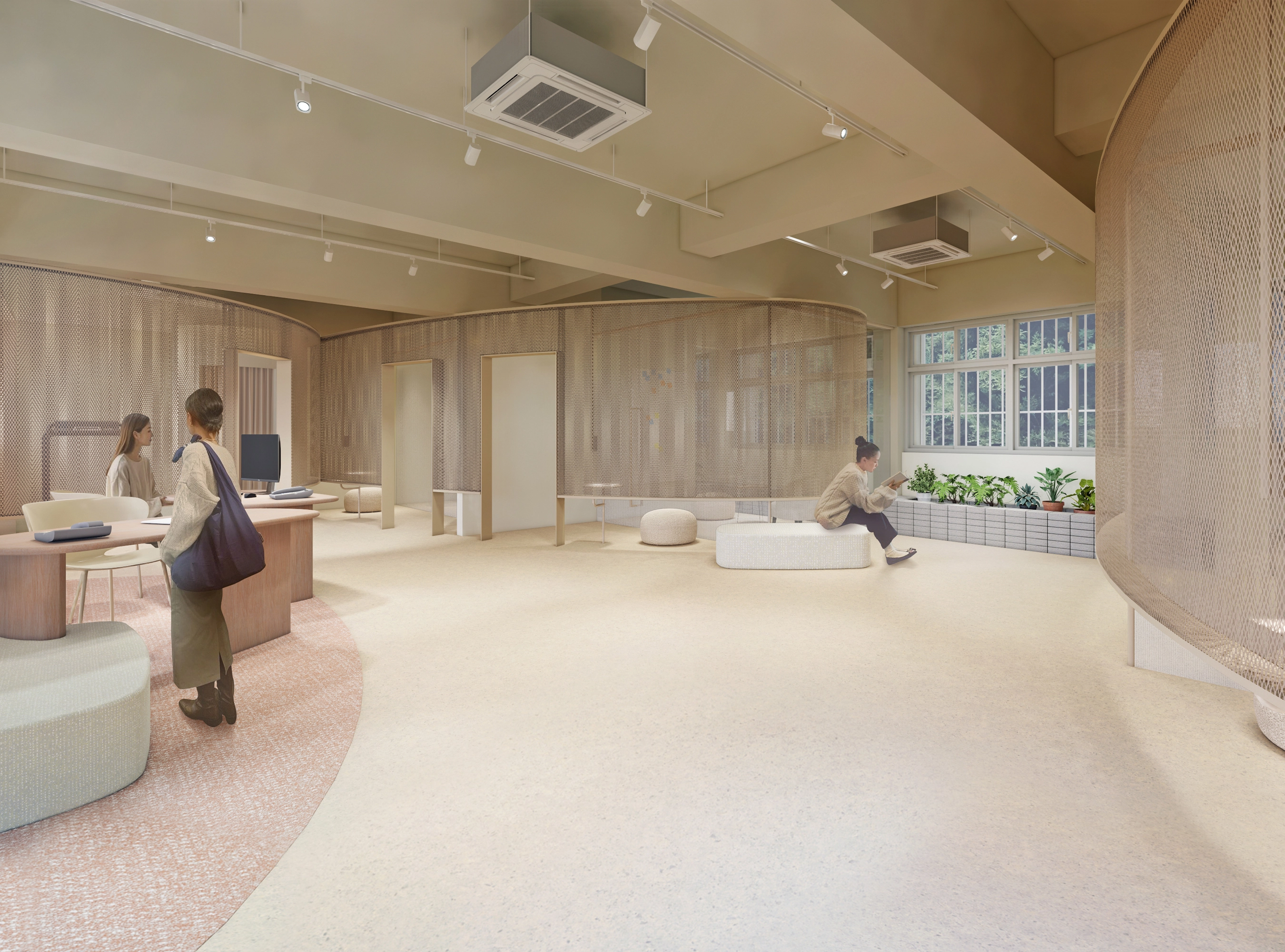
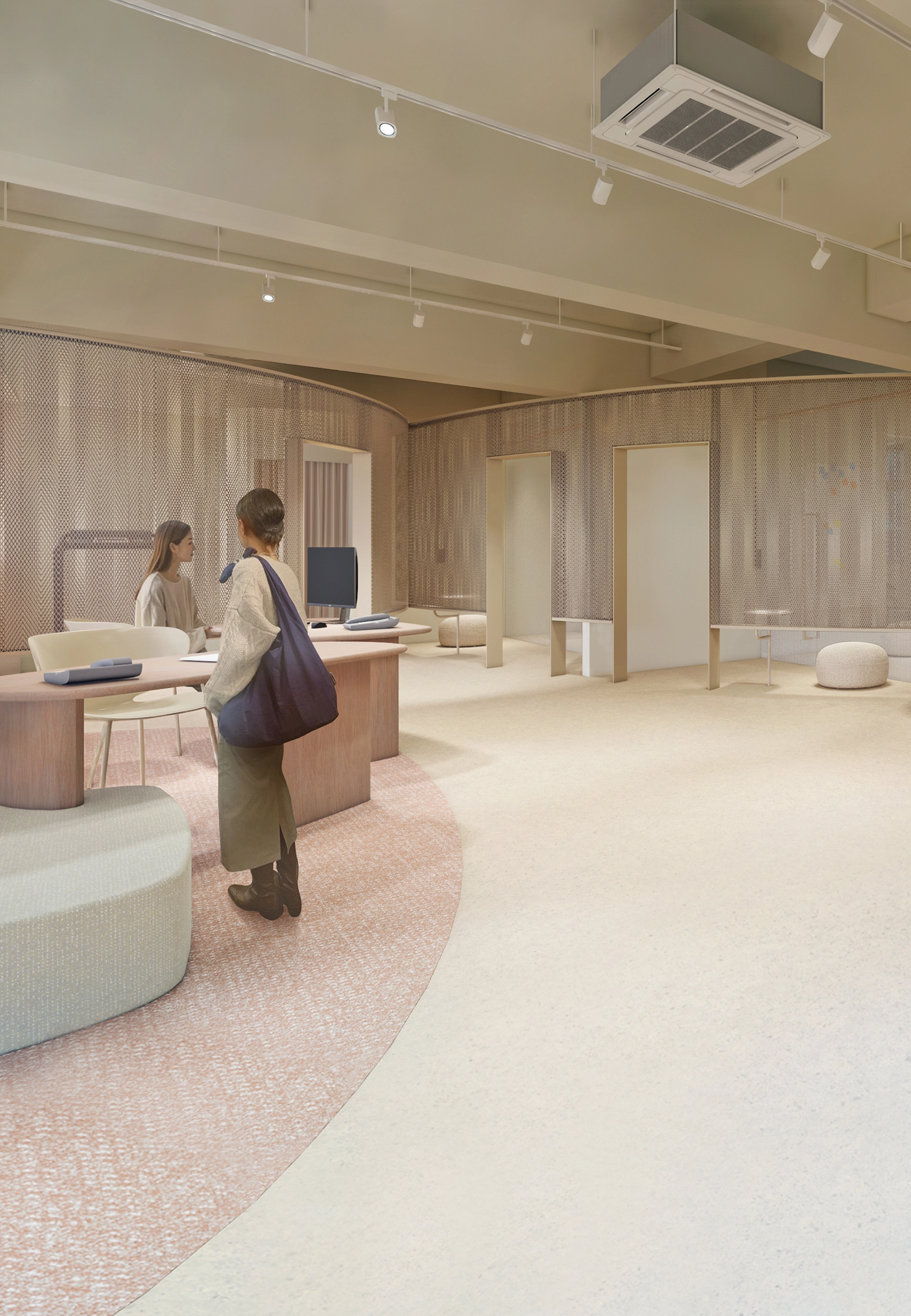
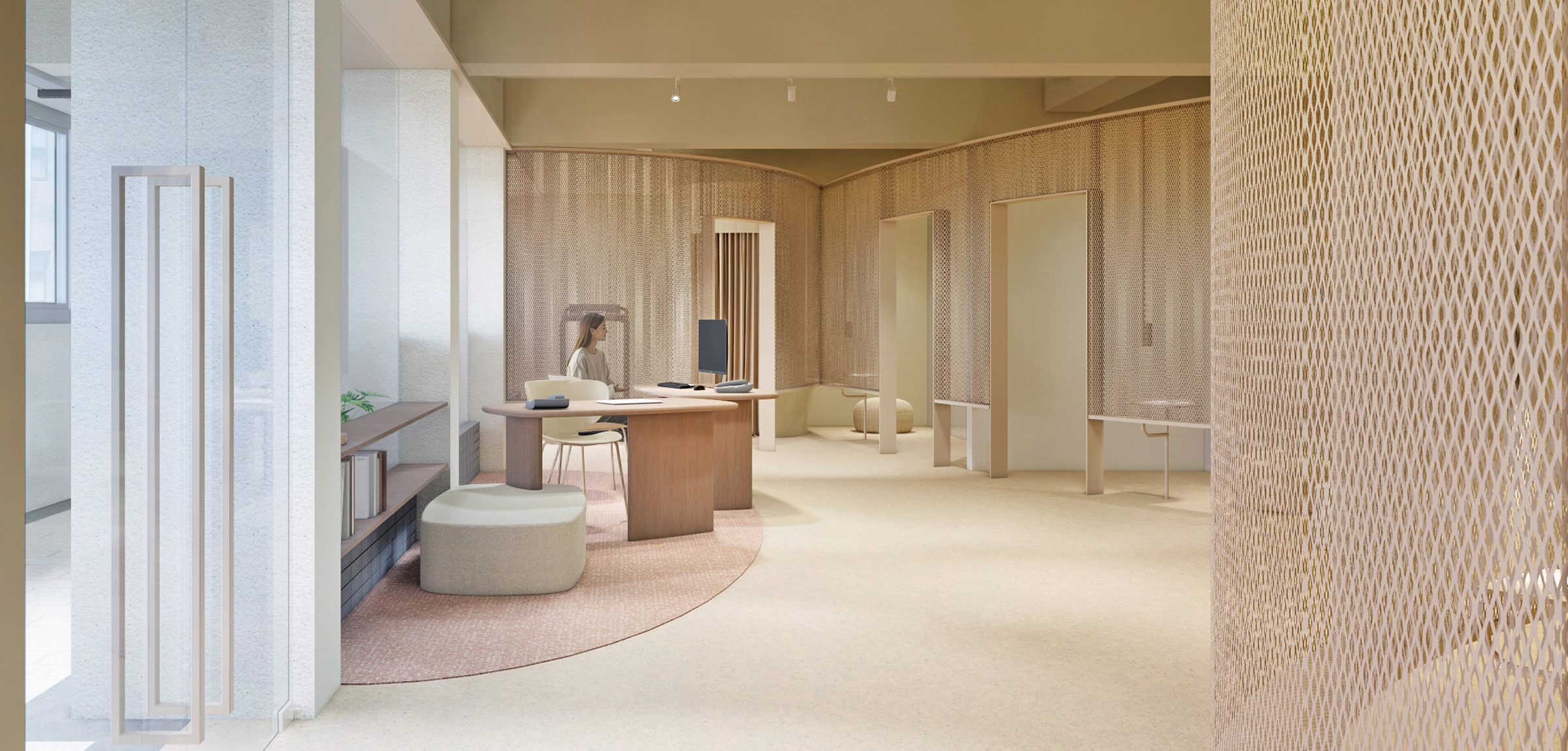
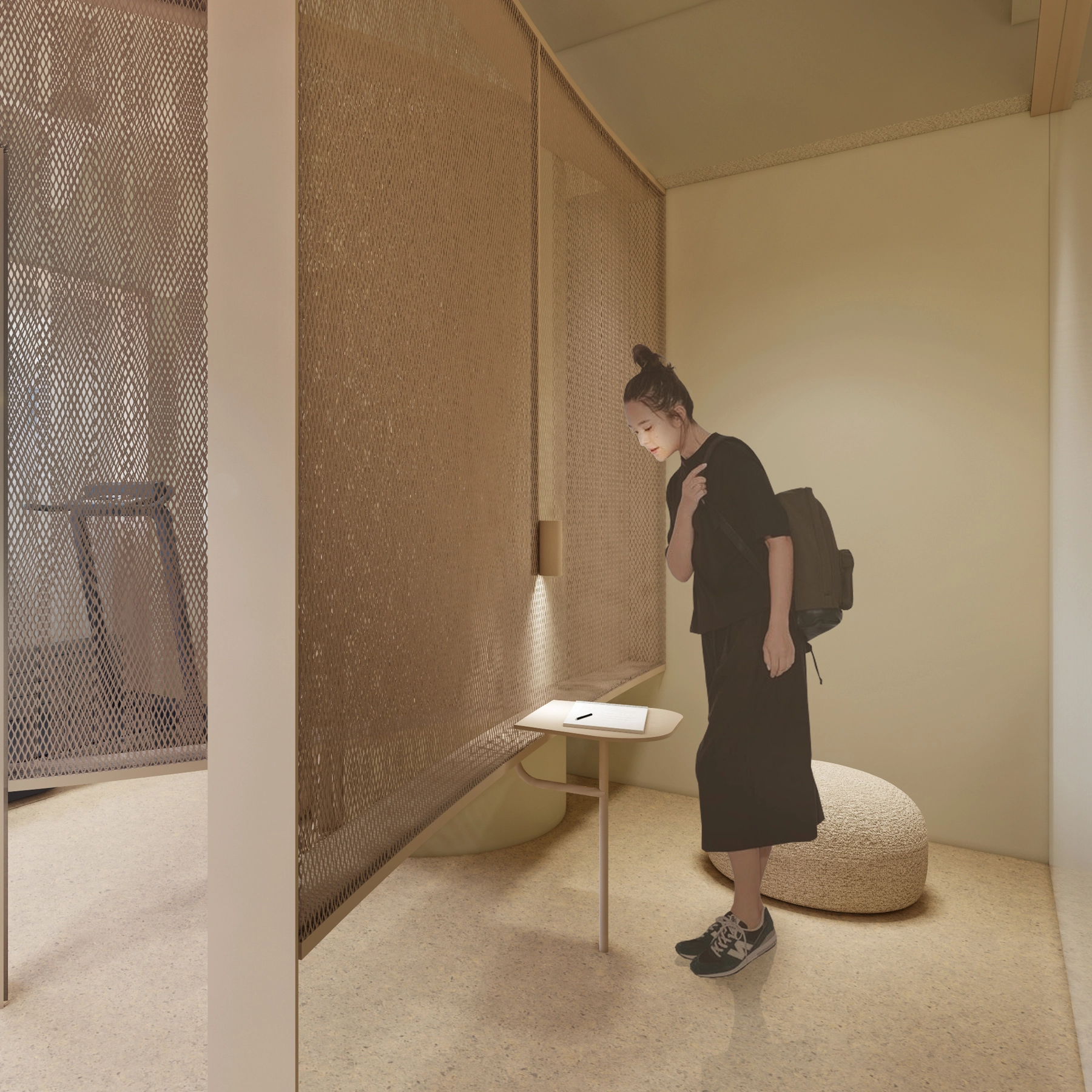
The counseling center imagined here is neither a clinical room nor an administrative facility. Instead, it is understood as a constant background presence — quiet, unobtrusive, yet consistently available. Like white noise, it softens disruption, fills absence, and creates conditions for calm attention: something one may not always notice, yet instinctively turn toward when needed.
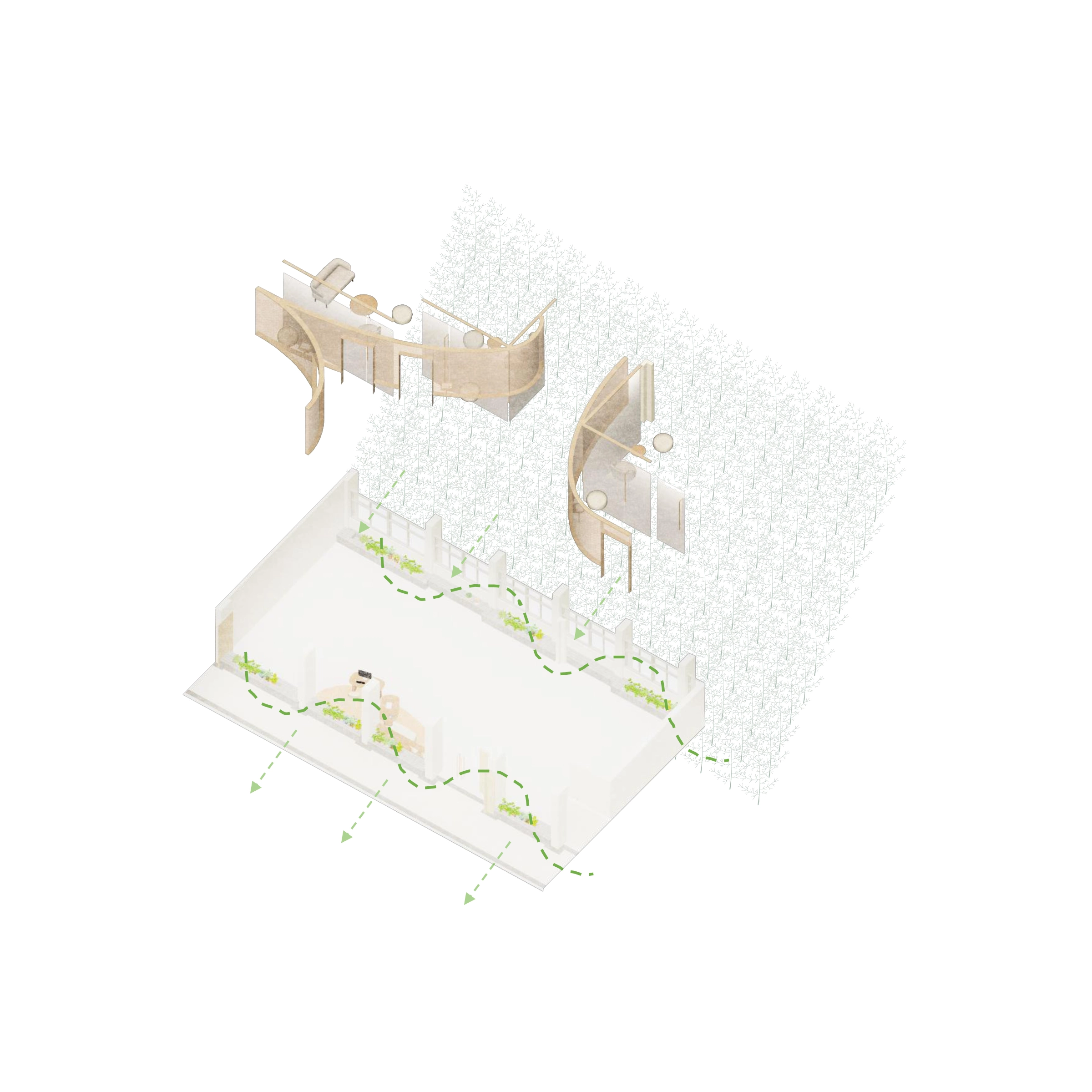
Situated between the hillside behind the campus and the open school grounds beyond, the site exists within a dialogue between interior and landscape. Greenery, shifting daylight, and restrained material textures are woven into a subdued spatial atmosphere, allowing the environment to dissolve beyond institutional labels and become part of everyday campus life.
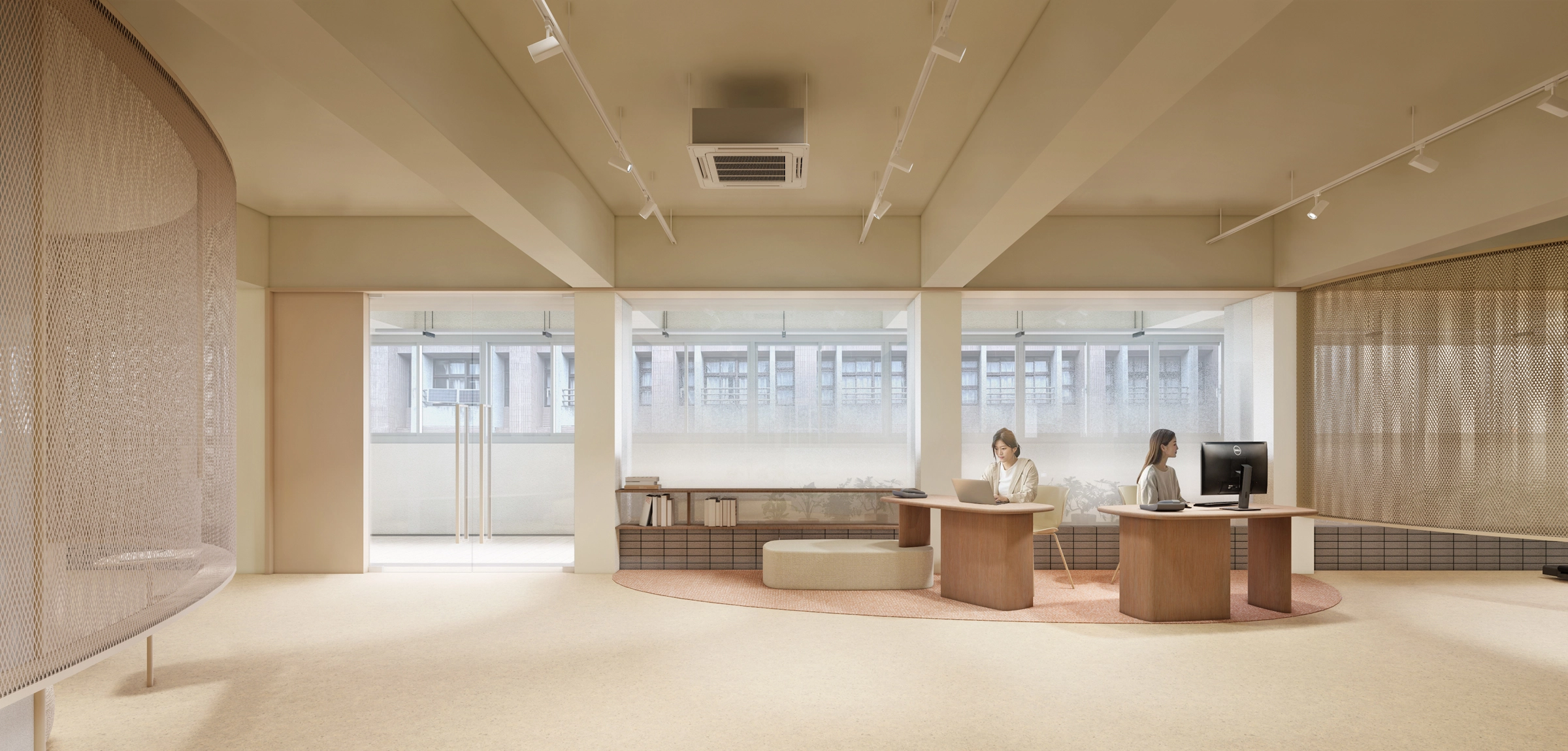
Emotional support does not emerge solely through language. At times it is found in the rhythm of walking; at others, in resonance and sound. A singing bowl meditation room and a fluid movement corner offer alternative modes of grounding and restoration. Space thus becomes a form of breathing: suspended between ambiguity and clarity, openness and protection, gently surrounding those who enter.
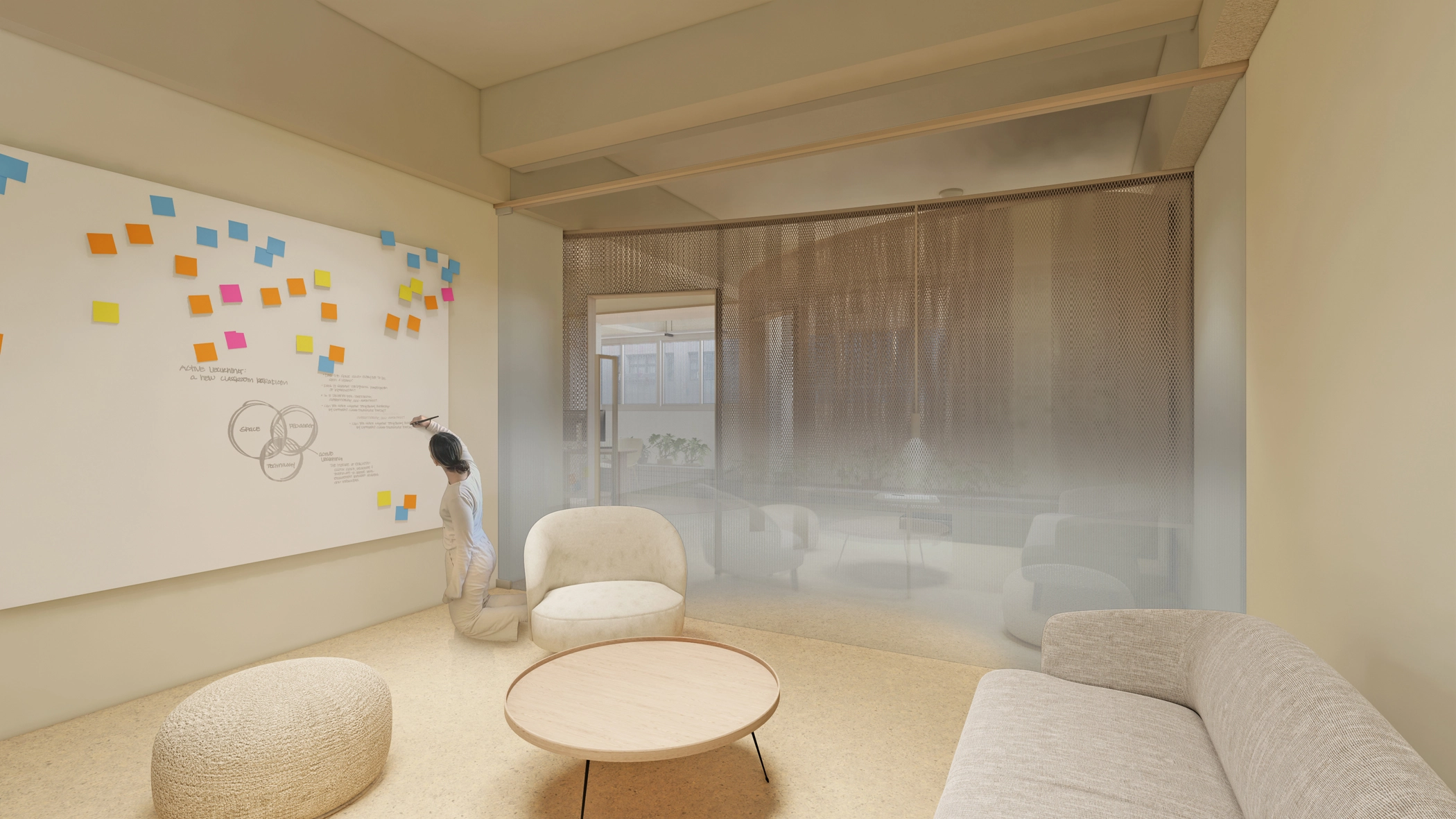
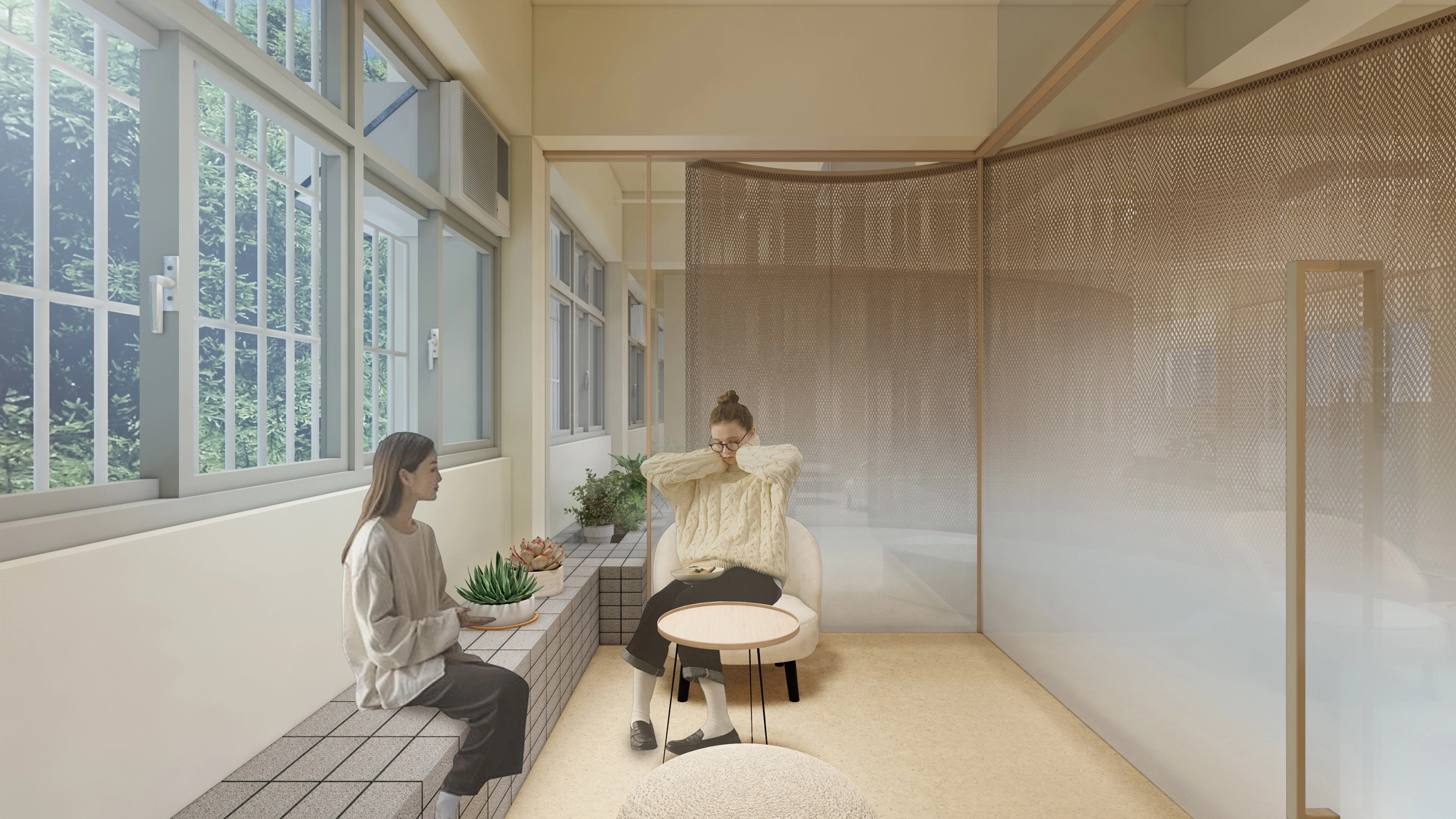
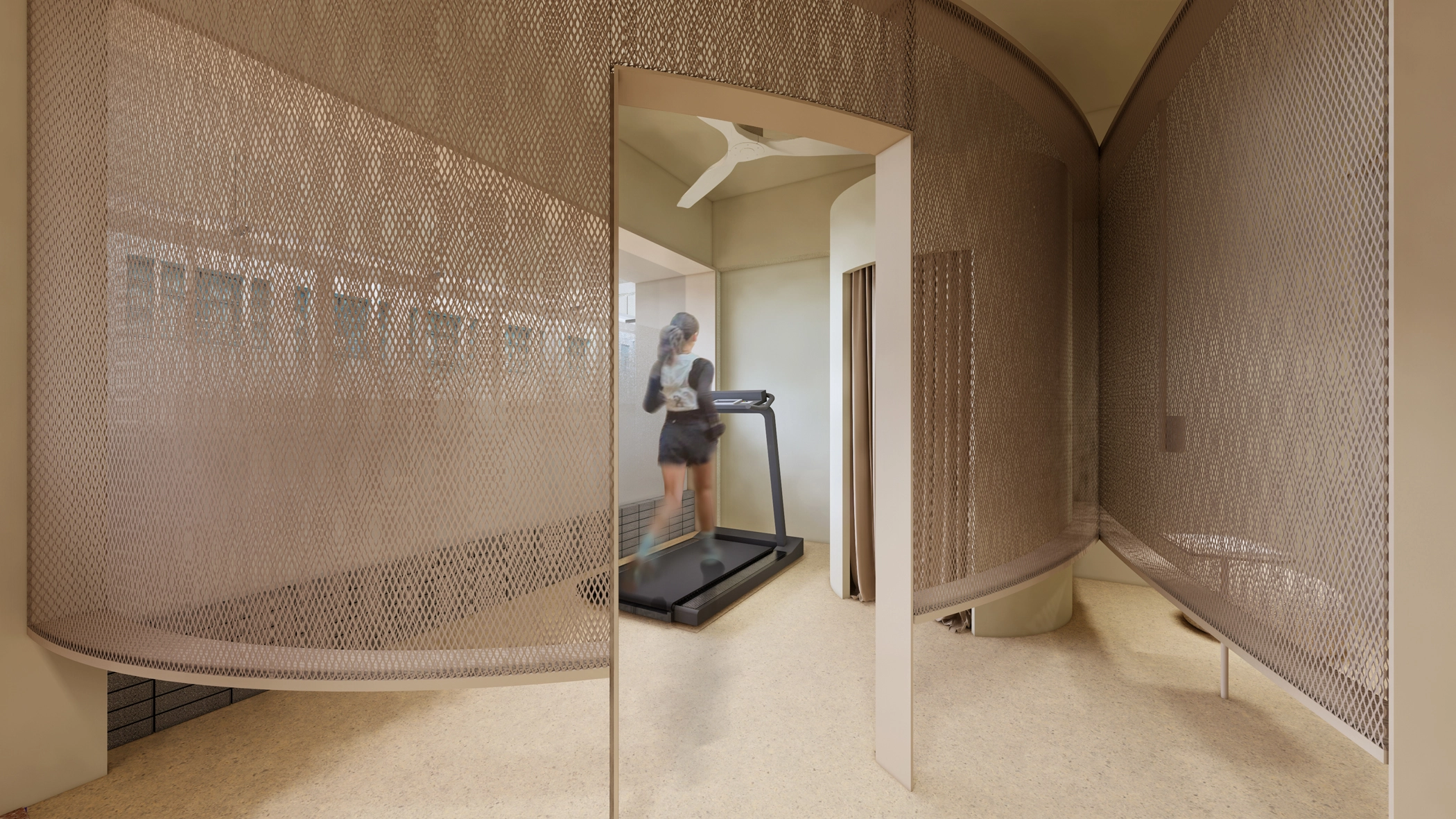
Micro Respite.
It describes a quiet interval of release — a place that does not demand attention, yet remains continuously present. Much like white noise, the space safeguards emotional well-being through a low and steady presence, allowing visitors to momentarily set things down, and gradually recover calm, focus, and equilibrium.